
How to Get Good Grades Without the Burnout
Jan 25, 2026

Let's be real—getting good grades isn't about pulling more all-nighters. It’s about having a smart system. The real secret is to stop chasing scattered notes and cramming at the last minute. It all boils down to one core principle: getting all your learning materials in one organized hub. This simple change is the foundation for acing your classes because it cuts out the friction that fuels procrastination.
Ditch the Chaos: Organize Your Study Life in One Place
Real talk: Your current "study system" is probably a chaotic mix of lecture slides on your desktop, random PDFs in your downloads folder, and a dozen YouTube tutorials bookmarked somewhere. Sound familiar? When it’s time to study for a midterm, you waste the first hour just trying to find everything. That disorganization is a huge source of stress and wasted time.
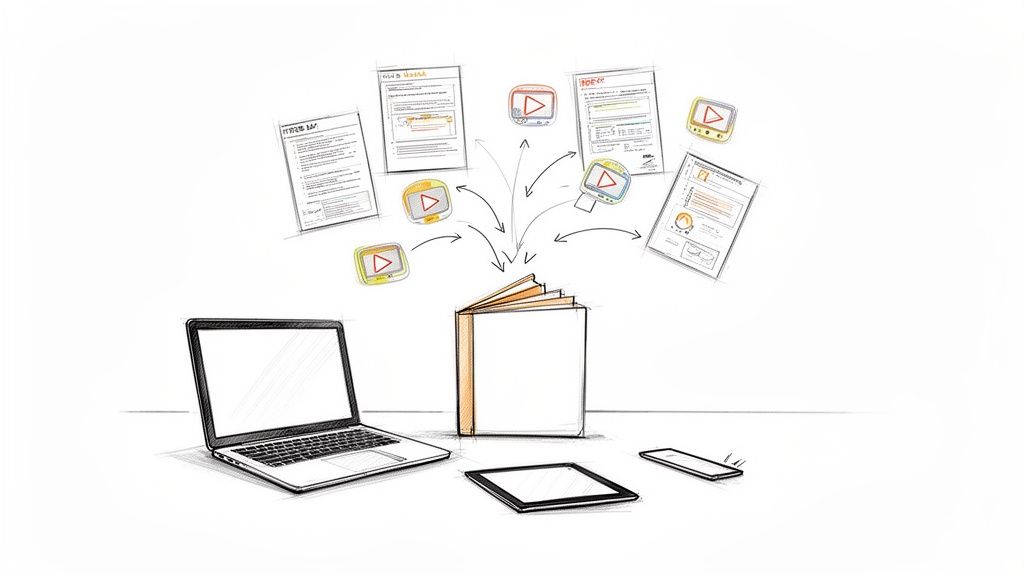
Now, imagine if all your class content—every slide, doc, and video—lived in one clean, organized space. This isn't just about being tidy; it's about creating a frictionless path to actually learning. When everything is in one spot, you can dive straight into studying instead of getting bogged down by digital clutter.
The Power of a Central Study Hub
Think of it like this: a messy kitchen makes you not want to cook. A messy digital workspace makes you not want to study. By creating a central hub for each class, you’re building an environment that encourages focus and shrinks the mental energy it takes just to get started.
This is where a tool like Vivora becomes your secret weapon. Instead of manually dragging files into endless folders, you just upload everything.
Lecture Slides and PDFs: Drop in all the PowerPoints and docs from your professor.
YouTube Videos: Paste links to those helpful explainers or recorded lectures.
Web Articles: Add links to important readings or online resources you've found.
Vivora's AI then does the heavy lifting, instantly transforming that mess of files into a single, personalized study guide. It pulls key concepts from video transcripts, organizes info from slides, and creates a clear roadmap for what you need to learn. Suddenly, your study process becomes proactive instead of reactive. You can learn more about how AI can supercharge your note-taking on our blog.
The Old Way vs. The Smart Way to Study
This shift from disorganized to organized isn't a small tweak; it's a fundamental change in how you approach your studies. Here’s a quick look at the difference it makes:
Study Habit | The Old Way (The Struggle is Real) | The Smart Way (The Glow-Up) |
|---|---|---|
Finding Information | Searching through multiple folders, bookmarks, and downloads. | Accessing everything from a single, centralized dashboard. |
Starting to Study | Feeling overwhelmed, leading to procrastination. | Diving straight into organized material with zero friction. |
Making Connections | Struggling to see how different materials relate to each other. | Seeing concepts from slides, videos, and PDFs integrated together. |
Reviewing for Exams | Re-gathering scattered notes and trying to make sense of them. | Using an AI-generated study guide that’s already synthesized. |
It's clear that centralizing your materials is the smarter path forward, saving you time and reducing stress.
From Clutter to Clarity
The difference this one change makes is immediate. Procrastination often kicks in when you feel overwhelmed by the sheer volume of disorganized material. When you have a clear, structured guide, that feeling evaporates. You know exactly what you need to cover and where to find it.
The single biggest upgrade you can make to your study habits is to stop wasting time searching for information and start spending that time actually learning it. Centralizing your materials is the first and most critical step.
This simple move sets the stage for every other effective study strategy. Once your content is organized, you can easily build a study schedule around specific topics, apply active recall with automatically generated flashcards, and walk into exams with confidence.
Stop letting digital chaos dictate your academic success. By creating a single source of truth for your coursework, you're not just getting organized—you're building the foundation for better grades and way less stress. This is the playbook for working smarter, not just pulling more all-nighters.
Build a Study System That Actually Works for You
Okay, so you’ve corralled all your course materials into one place. Huge win. But let's be real—that's only half the battle. An organized study hub is useless without a plan to actually use it. This is where we build a system that fits your life, working around your classes, job, and social life—not against them.
Forget the generic advice to just "study more." We're going to get specific with techniques that protect your time and energy, helping you get good grades without sacrificing your sanity.
Find and Protect Your Peak Focus Hours
Are you a morning person who’s sharpest right after a coffee, or do you get your best ideas after 10 PM? Everyone has "peak focus hours" when their brain is primed for heavy lifting. The secret is to figure out when those hours are and then guard them like your life depends on it.
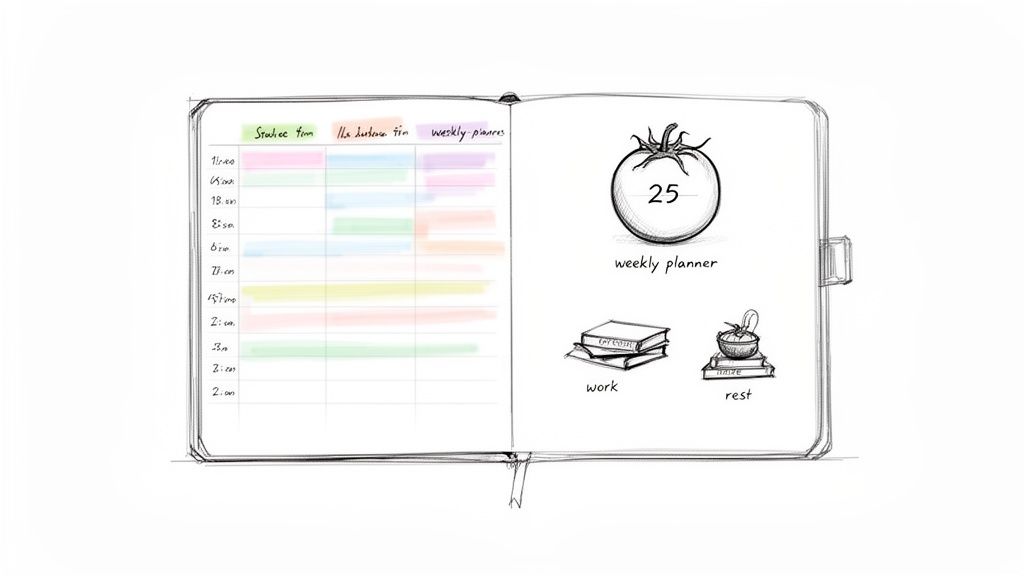
Once you know your prime time, use a technique called time blocking. Instead of a vague to-do list that’s easy to ignore, you schedule specific study tasks directly into your calendar.
Be Realistic: Don't schedule a three-hour marathon session for a topic you dread. Start with shorter, more manageable chunks.
Be Specific: Instead of a lazy "Study Bio" entry, block out "Review Vivora's Cellular Respiration quiz." The more specific, the better.
Be Protective: Treat these blocks like appointments you absolutely cannot miss. If a friend asks to hang out during your protected time, find another time.
This simple shift turns your vague intention to study into a concrete commitment, making it much harder to blow off.
Make Every Minute Count with Pomodoro
The thought of studying for hours on end is draining. It’s a huge reason why we procrastinate. The Pomodoro Technique is the perfect antidote. It breaks your work into focused, 25-minute sprints separated by short breaks.
It’s dead simple but shockingly effective. For 25 minutes, you give one task your undivided attention—no phone, no new tabs, zero distractions. When the timer dings, you take a five-minute break to stretch, grab some water, or scroll TikTok. After four of these "Pomodoros," you take a longer, more substantial break.
Your ability to focus is like a muscle. You can't expect to lift a heavy weight for hours without rest. The Pomodoro Technique is your brain's built-in rest day, preventing burnout and keeping your study sessions sharp and effective.
This method is a lifesaver for students juggling a heavy course load or a part-time job. A single, focused 25-minute session is far more productive than an hour of distracted, half-hearted studying.
Connecting Your Schedule to Your Study Hub
Now, let's tie it all together. Your schedule and your organized study hub need to work in sync. This is where having all your materials in a tool like Vivora pays off big time. When you plan your week, you’re not just blocking time; you’re assigning specific, AI-generated materials to each block.
Imagine your week looking something like this:
Monday (4:00-4:25 PM): Knock out the multiple-choice quiz Vivora made from last week's history lecture.
Tuesday (9:00-9:50 AM): Do two Pomodoro sessions reviewing the flashcards Vivora generated for your Econ midterm.
Thursday (7:00-7:25 PM): Use Vivora's AI chatbot to clarify three confusing concepts from your Chemistry PDF.
Suddenly, you’re not just "studying"—you’re executing a clear, actionable plan. Every 25-minute block has a purpose, and because the materials are ready to go, you waste zero time wondering what to do next. You just open your study hub and start learning.
This system isn't about finding more hours in the day. It's about making the hours you already have more impactful. By building a routine that combines smart scheduling with powerful tools, you create a sustainable habit that leads to better grades, less stress, and, believe it or not, more free time.
Ditch Passive Learning and Actually Remember Stuff
If your study routine involves a highlighter and rereading chapters until your eyes glaze over, you’re stuck in passive learning mode. It feels productive, but it's a huge reason why so many students blank on an exam after thinking they knew the material.
It’s time to switch to a method that actually works.
The key is to get active with your learning. Two of the most powerful, science-backed techniques are active recall and spaced repetition. They might sound complicated, but the idea is simple: stop just looking at the information and start pulling it out of your brain.
Why Your Highlighter Is Lying to You
Highlighting creates something psychologists call the "illusion of competence." As you drag that bright yellow marker across the page, your brain gets a false sense of familiarity. You recognize the words, so you think you know the concept.
But recognition isn't the same as recall. Not even close.
Rereading does the exact same thing. It’s comfortable and easy, which is precisely why it’s not very effective for building long-term memory. Real learning happens when you force your brain to struggle a bit to retrieve information.
The core problem with passive study methods is that they don't prepare you for what an exam actually asks you to do: retrieve information from scratch, without any cues. You need to practice the skill of remembering, not just the skill of recognizing.
That's where active recall comes in. It’s the simple act of trying to remember something without looking at the answer. Every time you do this, you strengthen the neural pathways for that memory, making it easier to pull up next time.
Putting Active Recall on Autopilot
So, how do you actually practice active recall without spending hours making flashcards by hand? This is where technology becomes your unfair advantage. Instead of manually creating all your study materials, you can use an AI partner like Vivora to do the heavy lifting.
When you upload your lecture notes, slides, or even a YouTube video link, Vivora’s AI instantly gets to work. It figures out the key concepts and automatically generates interactive flashcards and practice quizzes for you.
This completely flips the script on studying:
Before: You'd spend 80% of your time creating materials and only 20% actually studying them.
With Vivora: You spend 100% of your time actively testing yourself with ready-made tools.
This isn’t just about saving time; it’s about applying proven learning science to get better results. You can find more strategies for this in our guide on how to create flashcards that help you remember everything.
Lock in Learning with Spaced Repetition
Active recall is powerful on its own, but when you combine it with spaced repetition, it's a total game-changer. Spaced repetition is all about timing. Instead of cramming a concept over and over in one night, you review it at increasing intervals over time.
The goal is to review a concept right before you’re about to forget it. This strategic timing basically tells your brain, "Hey, this information is important—don't delete it!" Over time, this process moves knowledge from your shaky short-term memory into your solid, reliable long-term memory.
The McGraw Hill Global Education Insights Report 2025 backs this up, showing how AI tools can boost grades and test scores by embedding these proven methods directly into the study process. Vivora nails this by auto-generating flashcards and quizzes from your course materials, putting active recall—which research proves can increase retention by 200% over passive reading—at your fingertips. You can see more on this in these key findings on the 2025 landscape.
Vivora’s platform helps you implement this without even thinking about it. By using the quizzes and flashcards it creates, you can test yourself on different topics throughout the week. Maybe you review Chapter 3 concepts on Monday, Wednesday, and again the following Tuesday. The tool makes it easy to jump back into specific topics, helping you space out your practice without needing a complicated manual schedule.
By ditching passive rereading for active, AI-powered recall, you’re not just studying harder—you’re studying smarter. You’re building a system that respects your time and is based on how your brain actually learns, setting you up for consistent academic success.
Your Pre-Exam Playbook for Finals Week
Finals week can feel like the final boss battle of the semester, but it doesn't have to be a nightmare. With the right game plan, it can be your victory lap. Let's ditch the panic-fueled, all-night cram sessions and build a real playbook for the two weeks leading up to your exams. This is how you walk in feeling prepared, confident, and ready to ace it.
The goal isn't just to review everything; it's to review strategically. That means pulling all your notes together, hunting down your weak spots, and creating a targeted plan of attack that focuses your energy where it’ll make the biggest impact.
Consolidate and Conquer Your Notes
First things first: you need a single source of truth. Your mission in the first few days of this two-week window is to bring all your scattered notes, slides, and study guides together. If you've been centralizing your materials all semester, you're already way ahead.
If not, now is the time to gather everything. But don't just dump it all into one folder. The real magic happens when you use a tool like Vivora to synthesize it all. Upload your lecture PDFs, that one super helpful YouTube video, and your messy notes, and let its AI create one master study guide. This move alone cuts out the chaos and gives you a clear, consolidated foundation to build from.
This timeline shows how simple the learning journey can be: upload your stuff, practice with what the AI creates, and actually master the concepts.
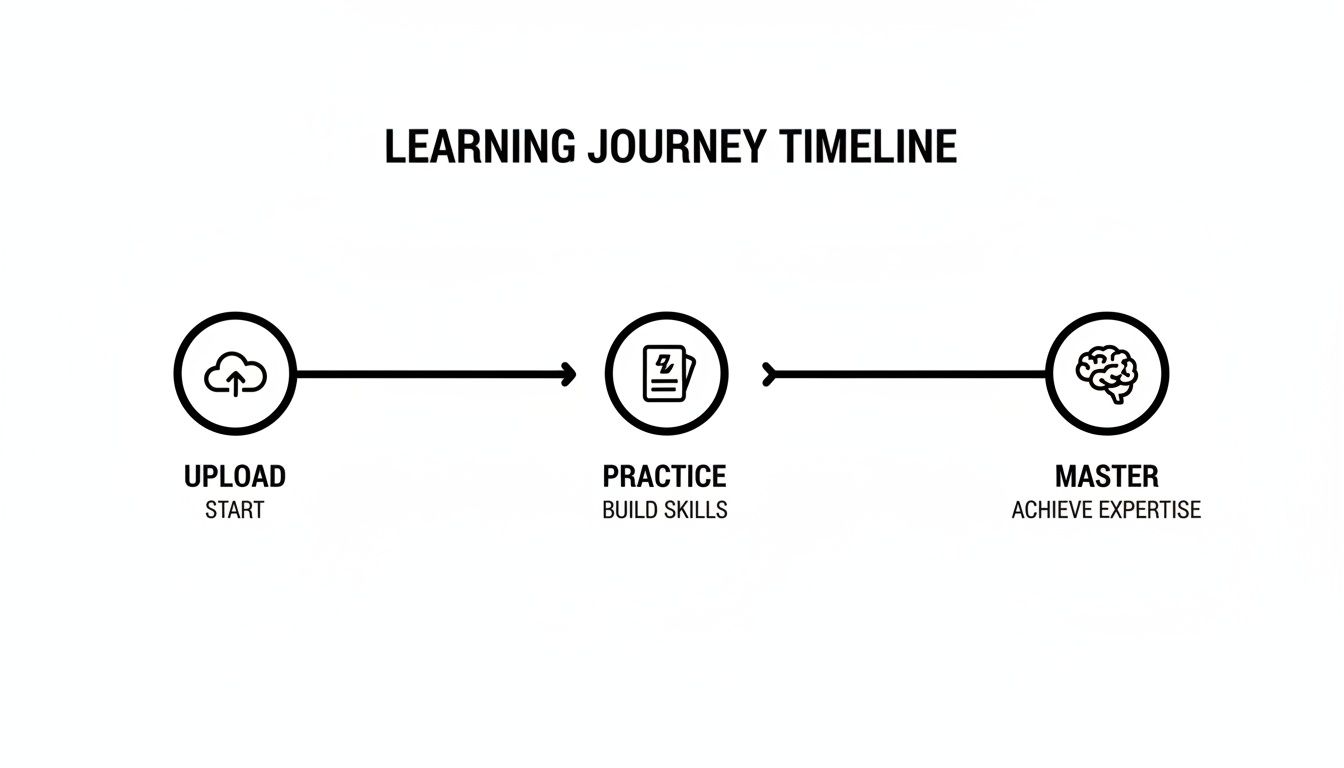
This process turns hours of tedious organization into minutes, freeing you up to spend your time on what really matters—active learning.
Identify and Target Your Weak Spots
Studying everything equally is a massive waste of time. You probably know 80% of the material reasonably well. The secret to a high grade lies in finding and fixing that tricky 20% you're still shaky on. So, how do you find it? You test yourself. Relentlessly.
This is where AI-powered tools become your personal tutor. Vivora’s progress tracking is perfect for this. As you take the practice quizzes it generates from your course content, it keeps a close eye on your performance.
Are you consistently messing up questions about the Krebs cycle?
Do you always forget the dates for the Peloponnesian War?
Can you never remember the formula for calculating torque?
Vivora’s analytics will show you exactly which topics are giving you trouble. Suddenly, you have a hit list. Instead of rereading every chapter, you can dedicate focused study blocks to mastering these specific concepts.
Simulate the Real Thing to Beat Exam Anxiety
One of the biggest reasons for bombing an exam isn't a lack of knowledge—it's anxiety. Your brain just freezes up under pressure. The best way to beat this is to practice under similar conditions.
The exam room should feel familiar, not frightening. Simulating exam conditions strips away the element of surprise and reduces the anxiety that can sabotage your performance.
Set aside time to take full-length practice tests. Find a quiet space, set a timer for the actual length of the exam, and put your phone away. No notes, no interruptions. This does two things: it builds your mental stamina for the real deal and exposes any lingering knowledge gaps you need to fill. If you need help fitting these sessions in, check out our guide for building a stress-free weekend study plan.
What about those late-night study sessions when a question pops up and you're totally stuck? Instead of falling down a YouTube rabbit hole, you can get an instant, reliable answer. Vivora's AI chatbot is trained on your specific course materials. Ask it to explain a tough concept from your lecture at 2 AM, and it will give you a clear, context-aware answer without the distractions. It's the ultimate on-demand study partner, ensuring you never stay stuck for long.
The Mindset Shift That Unlocks Better Grades
Let's be real: your study habits are only half the battle. You can have the best schedule and the smartest tools, but if your mindset isn't right, you'll constantly feel like you're fighting an uphill battle. The other half of getting good grades is purely psychological—it's about how you think about your work, your challenges, and yourself.
We're talking about overcoming that voice in your head that tells you to watch one more episode, dealing with the pressure to be perfect, and learning to see a tough class not as a threat, but as an opportunity. It’s a complete mindset shift, and it’s the key to unlocking your true academic potential.
Embrace a Growth Mindset
You’ve probably heard this term thrown around, but what does a growth mindset actually mean for a student? It’s the difference between saying "I'm just bad at math" and "I haven't figured out this type of problem yet." The first one is a dead end. The second one is a starting point.
A growth mindset is the belief that your abilities aren't fixed. You can get smarter, better, and more skilled through effort and the right strategies. When you hit a roadblock, you don’t see it as a reflection of your intelligence; you see it as a puzzle to solve. This simple switch in perspective changes everything.
Fixed Mindset: Avoids challenges to avoid failure.
Growth Mindset: Sees challenges as a chance to learn and improve.
Track Progress Not Just Perfection
Perfectionism is a trap that so many students fall into. You get so focused on getting a perfect score that any small mistake feels like a total failure, which can lead to serious procrastination. The antidote is to shift your focus from the final outcome to your daily progress.
Instead of obsessing over the A+, celebrate the small wins along the way. Did you finally understand a confusing concept? Win. Did you stick to your study schedule for a whole week? Win. These small victories build momentum and motivation, making the big goals feel much more achievable.
The goal isn't to be flawless from day one. It's to be a little bit better and a little bit smarter than you were yesterday. Celebrate the effort and the small steps forward—that's where real growth happens.
Beat Burnout with Smarter Tools
Maintaining a positive, motivated mindset is way easier when you're not constantly stressed and overwhelmed. It turns out that consistent study habits, backed by smart tools, can dramatically boost your grades. According to the McGraw Hill 2025 education report, a whopping 59% of educators worldwide say that GenAI has helped them save valuable time, with those users saving a median of 3-5 hours per week.
This statistic is a game-changer for students, too. When learning becomes more efficient, it becomes less stressful. Tools like Vivora, an AI-powered platform, mirror this efficiency by letting you upload course content to instantly generate organized notes, flashcards, and quizzes.
Using an AI study partner automates the tedious parts of studying so you can focus on actual learning. This efficiency frees up mental energy, reduces burnout, and helps you stay in that positive, growth-oriented headspace. You’re not just saving time; you’re protecting your motivation. Building this kind of resilience is crucial for surviving stressful periods like midterms and finals week.
When you have the right systems and the right mindset, you’re not just aiming for good grades—you're building a sustainable path to success.
Your Top Questions, Answered
Okay, we’ve walked through everything from wrangling your digital notes to crafting a bulletproof finals week game plan. But I'm sure you still have a few questions rolling around in your head. Let's get into some of the most common things students ask when they're serious about turning their grades around.
How Fast Will I Actually See My Grades Go Up?
This is the million-dollar question, isn't it? While there’s no magic wand, you can see a difference much faster than you might think, if you're consistent. The quickest wins come from two places: getting your stuff organized and swapping passive rereading for active recall.
Getting all your materials into one place with a tool like Vivora in the first week instantly kills that "I don't even know where to begin" paralysis. From there, once you start using the auto-generated flashcards and quizzes for just 20-30 minutes a day, you'll feel a real change in how much you remember within the first couple of weeks. Most students see a real, tangible grade bump on their very next quiz or midterm.
I Have a Million Different Types of Materials. Can Vivora Handle That?
Yep. In fact, that's exactly what it's built for. Vivora was designed for the messy reality of how students actually learn today, which means it can handle pretty much anything you throw at it.
It’s totally comfortable with all kinds of formats:
Those dense PDF lecture notes from your professor
The PowerPoint slides from class
That incredibly helpful YouTube video essay you found
Even a quick TikTok explainer that finally made a concept click
You just upload the files or paste in the links. The AI chews through all of it—pulling key ideas from video transcripts just as easily as from text documents—and spits out a single, unified study guide. No more juggling a dozen tabs and apps trying to piece it all together yourself.
Is It Cheating to Use an AI Study Tool?
This is a great question, and it's a really important one. The short answer is no, using an AI tool like Vivora is not cheating. Think of it as a personal tutor on steroids, not a shortcut to a grade you didn't earn.
It doesn’t write your papers for you or sit your exams. What it does do is work with your own course materials to help you create better, more effective study aids.
Using AI to generate flashcards from your lecture notes isn't cheating—it's just a smarter, faster way to do what A+ students have always done. It automates the grunt work so you can spend your time on the part that matters: actually learning.
It's all about making you better at understanding and recalling the material you're responsible for. Most universities are all for students using tools that promote active, self-guided learning, and that’s precisely what Vivora is designed to do.
What If I’m Just a Bad Test Taker?
So many students feel this way. But nine times out of ten, "being bad at tests" is a combination of two things: test anxiety and not practicing in a way that actually prepares you for the real thing. The strategies we've talked about, especially active recall and simulating exam conditions, hit both of those problems head-on.
When you use practice quizzes over and over, you’re not just learning the content; you’re practicing the skill of pulling information out of your brain when the pressure is on. This builds a quiet confidence and makes the real exam feel way less terrifying. You start to trust that the knowledge is really in there, and you know exactly how to get to it when it counts.
Ready to stop stressing and start studying smarter? Vivora turns your chaotic class materials into the organized, personalized study guides you need to succeed.
Get Your Free Vivora Account and Start Building Your Study Hub