10 Game-Changing Test Taking Strategies for Students (2026 Edition)
Feb 9, 2026
That pre-exam dread is real. You've got a mountain of lecture slides, chaotic notes, and a dozen YouTube explainers saved. It feels like you have to study 24/7 just to keep up, but what if the problem isn't how much you study, but how you study? The old-school methods of re-reading and highlighting are officially cooked. We're talking about science-backed, high-efficiency test taking strategies for students that actually work, saving you time and crushing that test anxiety.
Forget the endless scroll for random study hacks; this is your definitive guide. We'll break down ten elite strategies, from cognitive science principles like active recall and spaced repetition to practical test-day tactics that manage cognitive load and reduce stress. This isn't just a list of vague tips. We'll show you exactly how to implement each one using powerful tools designed for modern learning.
For instance, you'll learn how to turn your disorganized lecture notes into a strategic study plan and use AI to create practice quizzes on demand. Each strategy is a building block toward a more effective, less stressful approach to exams. You'll move from passive learning to active engagement, transforming how you prepare for and perform on any test. Ready to upgrade your study game and stop wasting time on methods that don't deliver? Let's get into it.
1. The SQ3R Method (Survey, Question, Read, Recite, Review)
Passive reading is out. If you've ever zoned out reading a textbook only to realize you absorbed nothing, the SQ3R method is one of the most effective test taking strategies for students to turn that around. It’s a five-step active reading system designed to boost comprehension and lock information into your long-term memory. Instead of just letting words wash over you, you're actively engaging with the material from start to finish.
This method transforms dense chapters or lecture notes into a manageable, interactive study session. It’s perfect for tackling heavy reading loads in subjects like history, biology, or poli-sci, ensuring you actually understand and retain the core concepts instead of just recognizing them.
How It Works
SQ3R breaks down your reading process into a structured, purposeful routine:
Survey: Get the lay of the land. Before reading, quickly skim the chapter titles, headings, subheadings, and any summary sections. With Vivora, you can use the AI-generated notes from a lecture video or uploaded PDF as your survey; the structured outline gives you an instant overview of the key topics.
Question: Turn those headings and key concepts into questions. For example, a heading like "Cellular Respiration" becomes "What are the stages of cellular respiration?" This primes your brain to look for answers. Use Vivora’s chatbot to ask, “Generate five key questions from this lecture on cellular respiration” to get a head start.
Read: Now, read the material with the specific goal of answering your questions. This active search for information keeps you focused and engaged, preventing your mind from wandering.
Recite: After reading a section, look away and try to answer your questions out loud in your own words. This verbal processing step is crucial for memory consolidation.
Review: Once you've finished the entire chapter, go back over your notes and questions. Test your recall by using Vivora to instantly create a quiz or flashcards based on the material you just covered. This solidifies your understanding and highlights any weak spots.
2. Spaced Repetition, Interleaving, and Varied Contexts
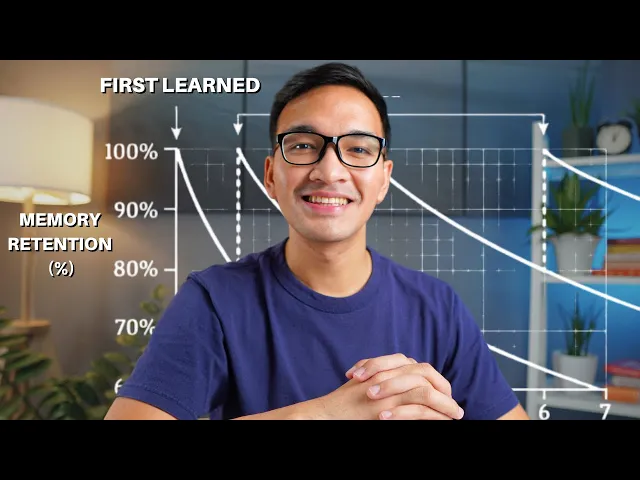
Cramming is out. If you’ve ever pulled an all-nighter only to forget everything by test time, you've experienced the "forgetting curve" firsthand. This collection of powerful, research-backed study methods are some of the best test taking strategies for students to beat that curve. Spaced repetition, interleaving, and varied contexts work together to build durable, long-term knowledge instead of temporary recall.
This trio is perfect for subjects with massive amounts of information, like med school courses or language vocab, and for skill-based subjects like math where you need to know when to apply different formulas. They train your brain to retrieve information more effectively, which is exactly what you need to do on an exam.
How It Works
These three concepts build on each other to create a powerful learning system that feels less like grinding and more like strategic training:
Spaced Repetition: Instead of cramming, you review information at increasing intervals over time (e.g., Day 1, Day 3, Week 1, Month 1). This tells your brain the information is important and strengthens the memory each time. Vivora’s AI-generated flashcards are perfect for this; review a deck, and then set a reminder to come back to it in a few days.
Interleaving: Don't study in blocks. Instead of doing 30 problems on Topic A then 30 on Topic B, mix them up. For example, an algebra student would mix problems on linear equations, quadratics, and exponents. This forces your brain to learn how to differentiate between concepts, a critical exam skill. Use Vivora’s quiz feature to randomize questions from different lectures or chapters.
Varied Contexts: Your brain links memories to your environment. Studying the same material in different locations (your desk, the library, a cafe) or different ways (reading notes, watching videos, doing practice problems) creates more retrieval cues, making the information easier to access during a test.
3. Active Recall and Retrieval Practice
Rereading your notes until your eyes glaze over is one of the least effective ways to study. The ultimate hack for long-term memory is active recall, a powerful study method that forces your brain to pull information out of storage. This is one of the most crucial test taking strategies for students because it directly mimics what you do on an exam: retrieving answers without looking at your notes.
This technique is all about testing yourself, which strengthens the neural pathways for that information, making it easier to recall under pressure. Instead of passively recognizing concepts, you are actively practicing the skill of remembering them. It’s the difference between watching someone play basketball and actually getting on the court to shoot hoops yourself.
How It Works
Active recall, often called retrieval practice, shifts your focus from putting information in to pulling information out. It’s a simple but profound change that cognitive science has proven to dramatically boost retention.
Self-Testing: Instead of rereading a chapter on the Krebs cycle, close the book and try to draw it from memory. Instead of looking over history notes, try to verbally explain the causes of World War I to a friend.
Practice Problems: For subjects like chem or stats, tackle problem sets without peeking at the solutions first. The mental struggle is where the real learning happens.
Use Quizzes as a Primary Tool: Don't save practice tests for the night before the exam. Use them throughout your study process to identify knowledge gaps early. With Vivora, you can instantly generate a quiz from any lecture video or PDF. Use these quizzes before you review to see what you already know and where to focus your energy.
Conversational Recall: Engage Vivora's AI chatbot in a conversation. Ask it to quiz you on key concepts from a recent lecture, and try to explain your answers back to it as if you were teaching the topic. This forces you to articulate complex ideas clearly. For another great retrieval tool, learn how to create flashcards that help you remember everything.
4. Elaboration and Deep Processing
Rote memorization is a trap. If you've ever crammed definitions only to forget them mid-exam, it's because the information was never truly yours. Elaboration is one of the most powerful test taking strategies for students to overcome this; it involves connecting new information to what you already know, forcing your brain to process it on a much deeper level. Instead of just memorizing a fact, you’re understanding its meaning, its context, and its relationships to other concepts.
This strategy moves you beyond surface-level recognition ("I've seen that term before") to genuine comprehension ("I can explain how this works and why it matters"). It’s especially critical for complex subjects like economics, physics, or literature, where understanding the 'why' and 'how' is more important than simply recalling the 'what'. Deep processing creates durable, flexible knowledge you can actually apply on a test.
How It Works
Elaboration builds strong, interconnected pathways in your memory. Instead of storing a concept in isolation, you link it to your existing knowledge base, making it easier to retrieve later.
Connect to Prior Knowledge: The core of elaboration is linking new material to old. When learning about supply and demand, a business student might connect the concept to the surge pricing they see in their favorite ride-sharing app.
Explain in Your Own Words: Force yourself to paraphrase. After reviewing your notes, try explaining a complex theory out loud as if you were teaching a friend. Vivora’s AI chatbot is perfect for this; you can type out your explanation and ask it, “Does my explanation of the Krebs cycle make sense? What did I miss?”
Create Concrete Examples: Abstract ideas stick better with real-world examples. For a physics formula, don't just memorize the variables. Instead, write a short problem about how it applies to a scenario you understand, like a baseball pitch or a moving car.
Ask "Why?": Constantly challenge the material. As you review Vivora-generated notes from a lecture, pause on each key point and ask, "Why is this true?" or "How does this connect to what we learned last week?" This inquiry-based approach forces deeper engagement.
Build Concept Maps: Don't just read your notes in a linear fashion. Use them to create a visual concept map showing how major themes, supporting details, and different lecture topics relate to one another. This transforms a simple list of facts into a web of interconnected knowledge.
5. Cognitive Load Management and Chunking
Your brain isn't a supercomputer with unlimited RAM; it has a limited working memory. Trying to cram too much complex info into it at once is a recipe for burnout. This is where managing your cognitive load comes in, and "chunking" is one of the most powerful test taking strategies for students to do it. Instead of memorizing a million tiny details, you group related information into larger, meaningful chunks, making it easier to process, understand, and recall.
This strategy is a lifesaver for dense, information-heavy subjects like medicine, programming, or history. It prevents cognitive overload by organizing complex topics into manageable mental files, allowing you to see the big picture without getting lost in the weeds. By working with your brain's natural limits, you can learn more efficiently and reduce study-session anxiety.
How It Works
Chunking breaks down overwhelming subjects into a structured, digestible format that aligns with how your memory works:
Identify Core Concepts: First, identify the main pillars or categories of the topic. In anatomy, instead of memorizing every single bone, you'd start with chunks like "Axial Skeleton" and "Appendicular Skeleton." Vivora’s AI-generated notes are perfect for this, as they automatically organize lecture content into logical, hierarchical sections, giving you an instant chunked framework.
Group Related Details: Once you have your main chunks, start filling them with related details. For a history student studying World War II, a chunk might be "Key Battles of the Pacific Theater," under which you'd group Midway, Guadalcanal, and Okinawa. This connects individual facts into a cohesive story.
Build Connections: The real magic happens when you connect the chunks. How did the "Causes of the War" chunk lead to the "European Theater" chunk? Creating visual concept maps or using Vivora’s chatbot to ask, "How does concept A relate to concept B?" helps you build a strong, interconnected web of knowledge.
Practice Retrieval: Test your understanding by recalling the information chunk by chunk. Instead of trying to remember everything at once, focus on one category. Use Vivora to create a quiz specifically on one chunk of your notes, like "Diagnostic Tools for Cardiovascular Disease," to solidify your mastery of that section before moving on.
6. Practice Testing and Low-Stakes Quizzing
Cramming is out. Constantly testing yourself is in. If you've ever studied for hours only to blank out during the actual exam, practice testing is one of the most powerful test taking strategies for students to prevent that. It’s based on the "testing effect," a proven concept that retrieving information from memory strengthens it far more than just re-reading it. Low-stakes quizzes provide this retrieval practice without the high-pressure anxiety of a graded exam.
This strategy is a game-changer for any subject, from acing weekly vocab tests to prepping for major exams like the MCAT or a final in organic chemistry. It actively pulls info from your brain, identifying exactly what you know and what you don't, which is way more efficient than passively reviewing notes and hoping for the best.
How It Works
Practice testing flips the script from just studying content to actively using it. It builds stronger, more accessible memory pathways for exam day.
Frequent, Low-Stakes Quizzing: Instead of one massive study session, integrate short, frequent quizzes into your routine. The goal isn't to get a perfect score; it's to practice remembering. Use Vivora to instantly generate a quiz from your latest lecture notes or a textbook chapter PDF right after class to see what stuck.
Identify Knowledge Gaps: The real magic happens when you get a question wrong. That mistake is a bright, flashing sign pointing directly to a gap in your knowledge. This is your cue to revisit that specific concept.
Strengthen Recall: Each time you successfully answer a practice question, you make that neural connection stronger and faster. This process, known as retrieval practice, is what makes the information "stick" so you can access it easily under pressure.
Reduce Exam Anxiety: By making testing a regular, low-pressure habit, you normalize the experience. When you walk into the real exam, the format and the feeling of being tested are already familiar, which helps keep your nerves in check.
Review and Repeat: Immediately review your quiz results. Vivora provides instant feedback, explaining the correct answers so you can learn from your errors right away. Then, schedule another quiz in a few days to ensure you've truly mastered the material. This spaced repetition of testing is a top-tier study combo. With an AI quiz generator, creating endless practice material is effortless.
7. Metacognitive Awareness and Self-Regulated Learning
This might sound like a mouthful, but it’s one of the most powerful test taking strategies for students available. Metacognition is simply “thinking about your thinking.” It’s about knowing what you know, what you don’t know, and adjusting your study habits based on that honest self-assessment. Instead of blindly studying harder, you learn to study smarter by becoming the manager of your own learning process.
This strategy is a game-changer for avoiding the trap of false confidence, where you feel like you understand a topic but blank out on the exam. It pushes you beyond surface-level recognition to achieve true mastery, making it essential for cumulative finals, standardized tests like the SAT or MCAT, and any course where deep understanding is critical.
How It Works
Metacognition and self-regulation turn studying from a passive activity into a strategic, goal-oriented mission. You’ll actively plan, monitor, and adapt your approach to get better results with less wasted effort.
Plan Your Approach: Before diving in, set specific goals. Don't just say "I'll study chemistry." Instead, aim for something measurable: "I will master the 30 key terms for Chapter 5 using Vivora's flashcards and be able to explain the process of glycolysis without my notes."
Monitor Your Understanding: This is where you check in with yourself. While studying, constantly ask, “Do I actually get this, or am I just reading words?” A killer technique is the Feynman method: try to explain a concept out loud to an imaginary 5th grader. If you can’t simplify it, you haven’t mastered it.
Evaluate Your Performance: After a study session or a practice quiz, analyze the results. Don't just look at the score. Ask why you got certain questions wrong. Was it a simple mistake, or a genuine gap in your knowledge? Vivora’s quizzes provide instant feedback, making this step quick and easy.
Adapt Your Strategy: Based on your evaluation, change what isn't working. If flashcards aren’t helping with complex processes, switch to drawing diagrams or asking Vivora’s chatbot to explain the concept in a different way. This continuous improvement cycle is the core of effective self-regulated learning.
8. Focused Attention and Minimizing Distractions
You can't learn what you don't pay attention to. Multitasking is a myth; what you’re actually doing is rapidly switching your focus, which fragments your learning and tanks your memory encoding. This is where focused attention, popularized by concepts like Cal Newport's "Deep Work," becomes one of the most critical test taking strategies for students. It’s about creating an intentional, distraction-free bubble to allow your brain to process information deeply and efficiently.
This strategy is essential for anyone who gets derailed by a single notification or finds themselves with 10 unrelated browser tabs open after a "quick" study session. By deliberately eliminating distractions, you enable your brain to form stronger neural connections, leading to better retention and recall on test day.
How It Works
Creating an environment for deep work involves actively managing both your physical and digital spaces to protect your focus. It's about being proactive, not just reactive, when distractions arise.
Create a Fortress of Solitude: Your environment is your first line of defense. This means finding a study spot where you won't be interrupted, like a quiet library corner. The most powerful move? Put your phone in another room. Not on silent, not flipped over, but physically out of reach to eliminate the temptation entirely.
Implement a Digital Lockdown: Use tools to your advantage. Website and app blockers can prevent you from mindlessly scrolling through social media when you should be studying. To streamline even further, study exclusively within the Vivora platform; with your AI notes, quizzes, and flashcards all in one place, you won't need other distracting tabs open.
Work in Timed Intervals: Use a structured method like the Pomodoro Technique. You work with intense focus for 25 minutes, then take a 5-minute break. After four cycles, you take a longer break. This trains your brain to sustain focus for set periods.
Communicate Your Boundaries: Let friends and family know when you’re entering a deep work session. A simple text like, "Going offline to study for an hour, will text you back after!" sets clear expectations and prevents interruptions. This is how you reclaim your focus and actually get things done.
9. Personalized Learning Pathways and Adaptive Studying
Studying everything with equal intensity is inefficient. Personalized and adaptive studying is one of the most powerful test taking strategies for students because it ditches the one-size-fits-all approach. This strategy uses your performance data to create a custom study plan that focuses your energy precisely where you need it most, adjusting in real time as you learn. Instead of wasting time on concepts you’ve already mastered, you can zero in on your weak spots.
This tech-driven method is a game-changer for anyone feeling overwhelmed by a massive syllabus or struggling to identify their own knowledge gaps. It’s perfect for complex STEM subjects, standardized test prep, or any course where concepts build on one another. The system learns your strengths and weaknesses, ensuring every study session is as productive as possible.
How It Works
Adaptive learning tools use AI to analyze your performance and guide your study sessions, creating a dynamic feedback loop that optimizes for understanding and retention.
Initial Assessment: You start by taking quizzes or engaging with material. Vivora analyzes your performance on an initial quiz generated from your lecture notes or uploaded readings to establish a baseline of what you know and what you don't.
Identify Weak Spots: The AI crunches the numbers to pinpoint specific concepts or topics where you struggled. For example, if you consistently miss questions about "mitochondrial function" in biology, the system flags it as a priority area.
Personalized Recommendations: Based on this analysis, the platform recommends what to study next. Vivora might suggest re-watching a specific 2-minute clip from a lecture, reviewing AI-generated notes on the flagged topic, or drilling a custom-made flashcard deck focusing only on your weakest concepts.
Continuous Adaptation: As you complete more quizzes and review materials, the system constantly updates your learning pathway. Once you demonstrate mastery in one area by consistently answering questions correctly, Vivora will de-prioritize it and shift your focus to the next area needing improvement. This ensures your study plan evolves with you, keeping you challenged but not overwhelmed.
10. Exam-Format Specific Preparation and Question Prediction
Walking into an exam knowing exactly what kind of questions to expect is a massive advantage. This strategy is all about tailoring your study sessions to the specific format of the test, whether it’s multiple-choice, free-response, essays, or numerical problems. Instead of just reviewing your notes, you actively practice the skills required for that particular test format, which is one of the most underrated test taking strategies for students.
This approach bridges the gap between knowing the material and proving you know it under pressure. It’s perfect for high-stakes exams like AP tests, med school boards, or law school finals where the question style is just as important as the content itself. By practicing in the actual format, you improve your speed, accuracy, and confidence, eliminating that dreaded feeling of "I knew this, but I couldn't answer the question."
How It Works
This strategy involves two key parts: identifying the exam format and then practicing with predicted questions that match it.
Identify the Format: The first step is simple but crucial: find out exactly how you'll be tested. Ask your professor or TA directly: Is it multiple choice? Free response? A mix? What’s the time limit? Knowing these details shapes your entire study plan. For example, preparing for a multiple-choice history exam is very different from preparing for an essay-based one.
Predict and Practice: Once you know the format, start predicting likely questions and practicing them under timed conditions. Focus on topics your instructor emphasized in class or that appeared frequently in past exams. Use Vivora to turn your lecture notes or textbook chapters into a practice quiz, making sure to select the question format that matches your upcoming test (e.g., multiple-choice, short answer).
Replicate Test Conditions: Don't just answer practice questions casually. Set a timer based on the real exam’s constraints. If your stats exam is non-calculator, practice without one. If it's a timed essay, write out full responses, not just outlines. This helps you master pacing and reduces anxiety on test day.
Analyze Your Performance: After a practice session, analyze your mistakes. Did you run out of time? Did you misread the question? Did you make a careless error? Use Vivora’s quiz results to pinpoint weak areas. Understanding why you got a question wrong is key to improving. For instance, if you’re struggling with multiple-choice questions, practice the process of elimination. If you’re weak on free-response, focus on structuring clear, concise answers with correct terminology.
10-Point Test-Taking Strategy Comparison
Method | 🔄 Implementation complexity | ⚡ Resource & time requirements | ⭐ Expected outcomes | 📊 Ideal use cases | 💡 Key advantages / tips |
|---|---|---|---|---|---|
The SQ3R Method (Survey, Question, Read, Recite, Review) | Moderate — five-step routine to follow consistently | Low tech, moderate upfront time (survey + question design) | ⭐⭐⭐⭐ — improves comprehension & retention | Text-heavy courses, chapter learning, structured materials | Use time-boxed phases; integrate with organized notes and quiz tools |
Spaced Repetition, Interleaving, Varied Contexts | High — requires scheduling and mixing strategies | Medium — needs spaced-schedule tools or apps and ongoing reviews | ⭐⭐⭐⭐⭐ — excellent long-term retention & transfer | Cumulative exams, vocabulary, medical/board prep, long-term courses | Automate spacing with apps; interleave problem types and vary study contexts |
Active Recall & Retrieval Practice | Low–Moderate — requires creating/testing with honest retrieval | Low — flashcards/quizzes; effortful practice sessions | ⭐⭐⭐⭐⭐ — strongest evidence for retention and exam performance | All subjects; especially high-stakes tests and problem-solving courses | Prioritize self-testing under timed conditions; resist peeking at answers |
Elaboration & Deep Processing | Moderate — requires reflective, generative activities | Low–Moderate — time and cognitive effort for explanations/applications | ⭐⭐⭐⭐ — produces flexible, transferable understanding | Conceptual courses, essays, interdisciplinary learning, application tasks | Explain in your own words, create concept maps, discuss with peers or AI |
Cognitive Load Management & Chunking | Moderate — needs design to identify meaningful chunks | Low–Moderate — time to reorganize materials and create frameworks | ⭐⭐⭐⭐ — makes complex material manageable; improves retention | Complex/abstract domains (medicine, programming, math) | Build skeleton frameworks first; group by relationships rather than chronology |
Practice Testing & Low‑Stakes Quizzing | Low — frequent short quizzes are simple to implement | Low — needs well-designed question bank and regular practice | ⭐⭐⭐⭐⭐ — large effect sizes; strong formative feedback | Weekly course checkpoints, standardized test prep, daily practice | Take low-stakes quizzes seriously; review feedback immediately and track trends |
Metacognitive Awareness & Self‑Regulated Learning | Moderate — requires habit formation and honest monitoring | Low — journal, trackers, and periodic reflection time | ⭐⭐⭐⭐ — improves efficiency and strategy selection | Learners aiming to optimize study habits across terms/courses | Predict performance, compare to results, adjust strategies based on data |
Focused Attention & Minimizing Distractions | Low — behavioral setup but requires discipline | Low — environment control, timers (Pomodoro) | ⭐⭐⭐⭐ — substantially better encoding and faster progress | Any study requiring deep understanding or long problem solving | Use phone-free zones, app blockers, Pomodoro; protect peak focus times |
Personalized Learning Pathways & Adaptive Studying | High — depends on platform algorithms and data | High — needs adaptive tech, sufficient performance data | ⭐⭐⭐⭐ — increases efficiency and engagement when well-calibrated | Diverse learners, remedial/advanced differentiation, large courses | Allow calibration time; combine platform suggestions with instructor priorities |
Exam‑Format Specific Preparation & Question Prediction | Low–Moderate — gather/example past exams and simulate conditions | Moderate — access to past papers, timed simulations, format-specific practice | ⭐⭐⭐⭐ — improves transfer, pacing, and exam-day performance | High‑stakes or format-sensitive exams (AP, boards, essays) | Replicate exact format and timing; analyze error types and prioritize high-value topics |
Your Ultimate Study Glow-Up Starts Now
We've just unpacked ten of the most effective, science-backed test taking strategies for students, and let's be real: this is a lot more than just re-reading your notes until your eyes glaze over. The old ways of cramming the night before, powered by sheer willpower and too much caffeine, are officially cancelled. The real glow-up in your academic life happens when you stop trying to force information into your brain and start working with its natural learning processes.
The core message threaded through every strategy, from SQ3R to active recall, is a shift from passive consumption to active engagement. You're not a sponge soaking up lectures; you're a detective piecing together concepts, a teacher explaining them back to yourself, and a strategist planning your attack for exam day. This is the fundamental difference between students who feel perpetually behind and those who walk into exams with quiet confidence.
The Shift from 'More' to 'Smarter'
Let's quickly recap the game-changing mindset shifts we've covered. It's not about studying more hours, but about making the hours you do study count for more.
Active vs. Passive: Instead of just reading, you're questioning, reciting, and reviewing (SQ3R). Instead of highlighting, you're using active recall and practice testing to pull information out of your brain, which is far more powerful for memory.
Strategic vs. Haphazard: You're no longer cramming. You're using spaced repetition and interleaving to strategically revisit information just as you're about to forget it, making long-term retention almost automatic.
Deep vs. Surface-Level: You're moving beyond memorizing definitions. With elaboration and deep processing, you're connecting new ideas to what you already know, creating a rich, interconnected web of knowledge that's easier to access under pressure.
Focused vs. Distracted: You're acknowledging the reality of cognitive overload. By managing your focus and chunking information, you're giving your brain manageable pieces to work with, preventing burnout and improving comprehension.
Mastering these test taking strategies for students is about more than just acing your next midterm. It's about building a sustainable, less stressful relationship with learning itself. It’s about reclaiming your time, reducing that ever-present anxiety, and proving to yourself that you are more than capable of mastering complex subjects. When you study smart, you gain the freedom to actually enjoy your college or high school experience without the constant weight of academic pressure.
The journey from a stressed-out crammer to a strategic, confident learner doesn't happen overnight, but it starts with a single step. Pick one or two strategies from this list that resonate with you. Maybe you start by turning your Vivora notes into a set of flashcards for active recall, or by using the quiz feature for some low-stakes practice testing. The goal is progress, not perfection. By consistently applying these techniques, you are fundamentally rewiring your approach to education, building skills that will serve you long after your final exams are over.
Ready to ditch the study chaos and transform your class content into a personalized study guide? Let Vivora do the heavy lifting by turning your lecture notes into flashcards, quizzes, and summaries automatically. Start using these powerful test taking strategies for students today by signing up for free at Vivora.